Reviewing Flippin Awesome - Kitchen SVG for Embroidery
As a designer who spends more time staring at stitch simulations than I do sleeping, I have learned that not every cute graphic translates well to thread. We see thousands of digital files flood the market daily, promising ease and charm, but few survive the harsh reality of the embroidery hoop. Today, I am taking a close, practical look at Flippin Awesome - Kitchen SVG. This is not just a quick glance at a preview image; this is an evaluation of how this design holds up when you are trying to run a profitable craft business or create a meaningful handmade product.
The first thing that strikes me about Flippin Awesome - Kitchen SVG is its attitude. It is playful, slightly retro, and undeniably cheerful. In the world of kitchen decor and culinary-themed gifts, there is a fine line between kitschy and charming. This design lands firmly on the side of charming. The typography suggests a casual, fun-loving home cook, which makes it an excellent candidate for personalized gifts. However, as embroidery professionals, we know that "cute" does not always mean "stitchable." Let’s dig into the mechanics.
First Impressions and Visual Personality
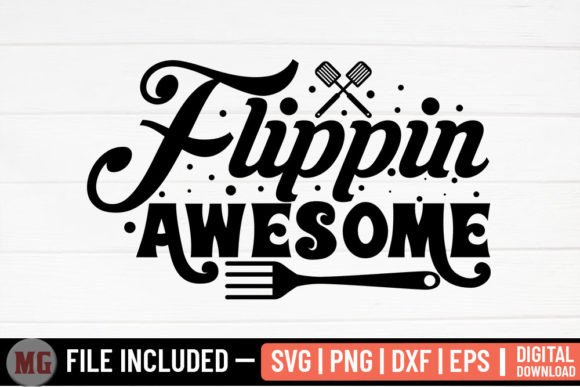
When I opened the file, the clean lines immediately caught my eye. The design relies heavily on bold shapes and clear lettering. For an embroidery project, this is a strong starting point. Intricate, wispy details often get lost in fabric texture, but the substantial forms in this Graphics asset suggest it will hold its own against the pile of a towel or the weave of a canvas tote. The mood is lighthearted, making it perfect for housewarming gifts, bridal shower favors, or just adding a pop of personality to a mundane apron.
The layout is balanced, which is crucial for hoop stability. An off-center or overly wide design can cause registration issues, especially on smaller hoops. From what I can see, the composition of Flippin Awesome - Kitchen SVG is compact enough to fit standard hoop sizes without requiring excessive resizing that might distort the lettering. This is a significant plus for small shop owners who need efficiency in their production line.
Real-World Application: The Tote Bag Test
To truly evaluate a design, you have to imagine it stitched out. I pictured this design on a natural cotton canvas tote bag. This is a staple item for any Etsy seller or craft fair vendor. The contrast between dark thread and light canvas would make the text pop. Because the design features bold elements, it would likely require a combination of satin stitch for the borders or smaller accents and a fill stitch for larger areas if converted properly.
If you are using this as a cut file for heat transfer vinyl (HTV) before embroidering around it, or if you are digitizing it yourself from the provided SVG, the simplicity works in your favor. Complex gradients do not translate to thread, but solid blocks of color do. I can easily see this working as a tote bag design that appeals to college students, young families, or anyone who loves a good pun in their kitchen.
Apparel and Home Decor Potential
Beyond totes, consider sweatshirt embroidery. A crewneck sweatshirt with this design centered on the chest creates an instant bestseller for the holiday season. The playful nature of the phrase fits the cozy, informal vibe of loungewear. It also works beautifully on aprons. An embroidered apron is a classic personalized gift, and having a design that is both readable and visually interesting adds perceived value to the finished product.
For those in the Crafts niche focusing on home goods, think about tea towels. Linen or waffle-weave towels provide a textured background. Here, the stitch density becomes critical. If the design is too dense, it will pucker the lightweight fabric. If it is too open, the fabric shows through awkwardly. Since Flippin Awesome - Kitchen SVG appears to have open spaces and clear lettering, it allows for breathability in the stitching, which is ideal for textiles that need to remain soft and absorbent.
Technical Considerations for Designers
Let’s talk about the files. You receive a zip file containing SVG, PNG, EPS, and DXF formats. This is a versatile package. The SVG and EPS files are vector-based, meaning they can be scaled infinitely without losing quality. This is essential if you want to resize the design for a tiny embroidered patch or a large pillow cover. The DXF file is particularly useful if you are using cutting machines alongside your embroidery setup, allowing for hybrid projects.
However, a word of caution: these are graphic files, not necessarily native embroidery machine files like PES or DST. Unless specified otherwise, you will likely need to digitize this design or use software to convert the SVG into stitches. This gives you control over stitch density, underlay, and thread paths, but it also requires skill. If you are new to digitizing, start by testing the auto-digitize function on scrap fabric. Check how the running stitch handles the curves and whether the satin columns are too wide for standard thread coverage.
Fabric and Stabilizer Choices
The success of this design depends heavily on your material choices. For stretchy fabrics like jersey knits used in t-shirts, a cut-away stabilizer is non-negotiable to prevent distortion. For woven fabrics like cotton twill or denim, a tear-away stabilizer might suffice, but I always recommend testing first. Dark fabrics present another challenge. If you are stitching light-colored thread on a black hoodie, you may need a backing layer or a higher density fill to prevent the fabric from showing through the stitches.
Also, consider the hoop size. If you are working with a 4x4 inch hoop, ensure the design fits comfortably within the margins. Crowding the edges can lead to skipped stitches or hoop burns. Always leave a margin of at least half an inch around the design perimeter.
Commercial Viability and Brand Consistency
For commercial embroidery professionals, consistency is key. Does Flippin Awesome - Kitchen SVG fit your brand? If your shop specializes in modern, minimalist home goods, this playful design might be a departure. However, if your brand is about warmth, humor, and approachability, it is a perfect fit. Using high-quality design assets like this helps maintain a professional look across your product line.
Customer trust is built on quality. A poorly stitched design looks amateurish, no matter how cute the graphic. By taking the time to test thread colors, adjust tension, and choose the right stabilizer, you elevate the perceived value of the item. A well-executed version of this design on a high-quality apron can command a higher price point than a generic, mass-produced alternative.
Final Verdict and Practical Tips
In summary, Flippin Awesome - Kitchen SVG is a strong contender for your next project. Its bold lines and cheerful message make it versatile for various applications, from baby embroidery on bibs to holiday embroidery on gift sets. It is particularly well-suited for small shop product lines that rely on quick turnover and high visual impact.
- Test on Scrap: Always run a test stitch-out on the same fabric type you plan to use for the final product.
- Check Contrast: Ensure your thread colors contrast sufficiently with the fabric for maximum readability.
- Review Licensing: Before selling items made with this design, confirm the license terms included in the download. Most commercial licenses allow for physical sales but restrict digital redistribution.
- Digitize Carefully: If converting from SVG, pay attention to corner sharpness and letter spacing to ensure clean stitching.
Whether you are a hobbyist looking to make a unique gift or an entrepreneur building a catalog of bestsellers, this design offers a solid foundation. With proper technique and attention to detail, Flippin Awesome - Kitchen SVG can become a standout piece in your portfolio. Happy stitching!