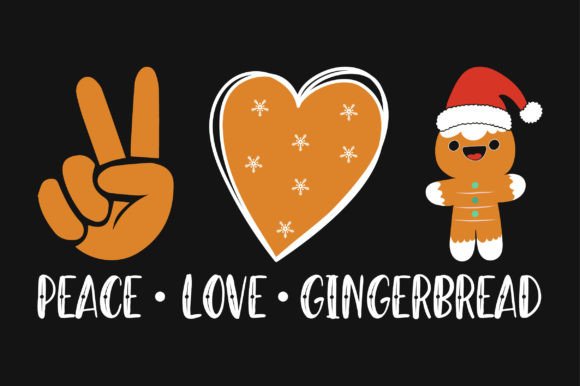
Review: Christmas Gingerbread SVG Sublimation for Holiday Embroidery
As a designer who spends more time staring at stitch maps than holiday lights, I approach every new Christmas Gingerbread SVG Sublimation file with a critical eye. We all love the aesthetic of the season—the warmth, the nostalgia, the smell of spiced cookies—but translating a digital graphic into a tangible handmade product requires more than just a cute image. It demands a file that respects the limitations of thread and fabric. After spending some time analyzing this specific design asset, I want to share my practical thoughts on how it performs in real-world embroidery scenarios, specifically for those of us running small shops or creating personalized gifts.
First Impressions: Mood and Visual Personality
When I first opened the files included in this package, the immediate vibe was undeniably cozy. The design captures that classic holiday spirit without feeling cluttered. What stands out initially is the clarity of the shapes. In the world of Crafts and Graphics, simplicity often translates best to stitching. A design that looks perfect on a high-resolution monitor can fall apart under the needle if the details are too fine. This gingerbread motif strikes a nice balance; it has enough character to be recognizable as a festive cookie but maintains bold enough lines to hold up well when converted into a machine embroidery design.
The layout feels versatile. It isn't so wide that it demands a massive hoop, nor is it so tall that it limits placement options. For an Etsy seller or a boutique owner, this kind of flexibility is gold. You aren't locked into one specific product type. The visual personality suggests warmth and tradition, making it an ideal candidate for items meant to evoke comfort, like kitchen textiles or family matching outfits.
Real-World Application: From Screen to Stitch
To truly test the viability of this Christmas Gingerbread SVG Sublimation, I mentally walked through a recent client request: a set of custom aprons for a local bakery's holiday pop-up shop. The client wanted something charming but durable enough to withstand a busy season. Here is how I see this design fitting into that project and others like it.
For custom apparel like sweatshirts or t-shirts, the design works beautifully as a chest pocket emblem or a central graphic. Because the source files include vector formats (AI, EPS, SVG), you have the freedom to scale the image precisely before digitizing it for embroidery. This is crucial. If you are planning sweatshirt embroidery, you might want to enlarge the design slightly to allow for thicker threads and a plusher fabric texture. Conversely, for a tote bag design, you might keep it moderate in size to maintain proportion.
I also see strong potential for baby embroidery. A onesie or a bib featuring a single, well-stitched gingerbread man makes for an adorable personalized gift. However, when working with smaller garments, you must be mindful of the hoop size constraints. While the design is scalable, shrinking it too much for a tiny baby sock could result in lost details, especially if the original sublimation art relies on very fine lines for decoration.
Navigating Fabric Textures and Challenges
No design exists in a vacuum; it always interacts with the medium. When using this graphic for holiday embroidery projects, the choice of fabric dictates the success of the final stitch-out.
- Textured Fabrics: If you are stitching onto a waffle-knit towel or a coarse linen pillow cover, the "fill" areas of your digitized version need to be dense enough to cover the fabric weave. The clean shapes of this gingerbread design help here, as they provide clear boundaries for your fill stitches.
- Stretchy Materials: For knit caps or stretchy tees, remember that the sublimation file itself is static. You will need to apply appropriate stabilizer during the embroidery process to prevent puckering. The design doesn't have excessive density that would naturally cause warping, which is a plus, but proper hooping technique remains essential.
- Dark Fabrics: One thing to consider is contrast. Since this is a sublimation-ready file, it likely assumes a light background for printing. If you are embroidering directly onto a black hoodie, you'll need to ensure your thread colors pop. A traditional tan for the cookie with bright white icing details usually works, but don't be afraid to experiment with metallic gold threads for the icing to add a premium feel to your small shop product.
Commercial Viability and Brand Consistency
For those of us treating our craft as a business, the question isn't just "does it look good?" but "does it sell?" and "does it build trust?" Using a cohesive design like this Christmas Gingerbread SVG Sublimation across a collection of products can significantly boost brand recognition. Imagine offering a matching set: a tea towel, an oven mitt, and an apron, all featuring the same gingerbread motif. This creates a curated look that customers love.
The professional finish of the final product depends heavily on how you translate these vectors into stitches. A sloppy digitization job can ruin even the best graphic. Ensure that your satin stitch columns for the outlines are smooth and that your fill stitch angles complement the shape of the cookie. Poor stitch density can lead to gaps in the fabric or thread breaks, which negatively impacts customer trust. If a buyer receives a gift where the design looks pixelated or poorly stitched, they are unlikely to return. Therefore, treating this digital asset with care during the production phase is vital for maintaining your reputation as a quality creator.
Practical Notes for the Designer
Before you commit to stitching this on a final garment, here are a few technical checks I recommend based on the file description provided:
- Verify the Vectors: The description states the file is "Made with 100 vector." Open the AI or EPS file in your preferred software (like Illustrator or Inkscape) to ensure there are no stray points or broken paths. Clean vectors make for cleaner digitizing.
- Color Testing: The file notes it is "Easy to change colors." Take advantage of this. Create mockups in both full color and black-and-white to see how the design holds up without the crutch of color differentiation. This helps you plan your thread palette effectively.
- Scrap Fabric Trials: Always run a test stitch-out on a scrap piece of the actual fabric you intend to use. This confirms your tension settings and stabilizer choice.
- Licensing Check: While the file includes multiple formats (AI, EPS, SVG, PNG), always double-check the specific license terms regarding commercial use. Can you sell the physical embroidered item? Can you resell the digital file? Clarifying this prevents legal headaches down the road.
- Detail Inspection: Look closely at any tiny decorative elements in the gingerbread design. If there are minute dots or very thin lines, they may need to be simplified or removed entirely for embroidery, as needles cannot replicate sub-pixel details.
Final Thoughts on Value and Execution
In the crowded marketplace of holiday goods, standing out requires attention to detail. The Christmas Gingerbread SVG Sublimation offers a solid foundation for creating memorable finished products. Its strength lies in its adaptability; it serves equally well as a focal point on a pillow cover or a subtle accent on a custom apparel line.
However, the true value comes from how you execute it. As designers, we are the bridge between a digital concept and a physical reality. By respecting the nuances of fabric texture, choosing the right thread colors, and applying sound digitizing principles, you can elevate this simple graphic into a cherished keepsake. Whether you are stocking up for a craft fair or fulfilling a custom order for a loyal client, this design has the potential to perform well, provided it is handled with the care and technical knowledge it deserves. Happy stitching, and may your holidays be filled with precise tension and beautiful seams.